The Best Method for Cleaning Hard Floors
Polished concrete and LVT floors are taking over office buildings. Here's why auto scrubbers outperform mops for cleaning, hygiene, and safety, and what it costs to make the switch.
Auto Scrubbers vs. Mops: The Best Way to Clean Hard Commercial Floors
More facilities are moving toward hard flooring in their office areas. Polished concrete floors in offices have grown by an estimated 50 to 70 percent over the past ten years, and adoption of luxury vinyl tile (LVT) has grown even faster, with some estimates putting LVT floor maintenance needs up more than 100 percent.
That raises a practical question for facility managers: what's the best way to actually keep these floors clean?
Traditional mopping still has a place, but for buildings with large areas of hard flooring, it's no longer the best option. Auto scrubber machines clean more thoroughly, more hygienically, and more safely than a mop and bucket ever could.
Why Floor Scrubbers Clean Better Than Mops
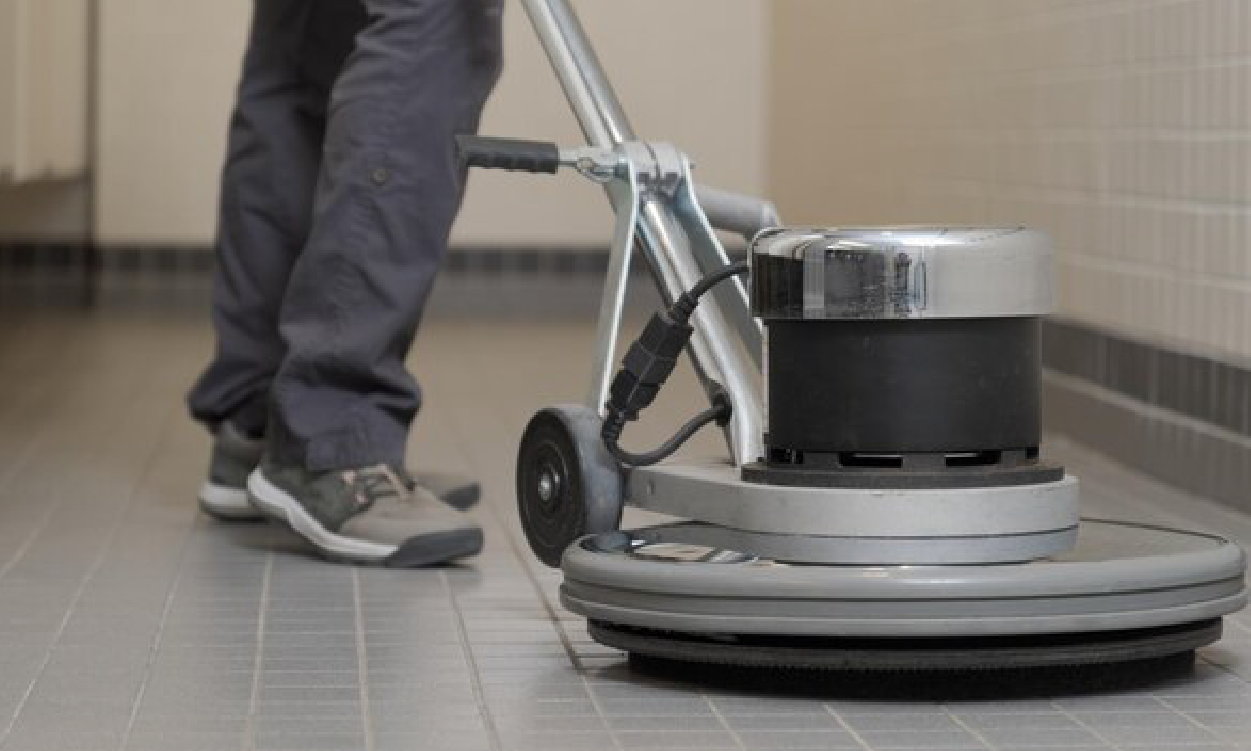
When you compare floor scrubbers versus mops, mechanical scrubbing consistently wins. Modern scrubbers agitate the surface with rotating brushes or pads, then immediately extract the dirty solution into a recovery tank. That combination pulls embedded grime out of the floor instead of just pushing it around, which is really all a mop can do.
Several microbiological evaluations back this up: wet-scrub methods reduce viable organisms on floors more effectively than most manual mopping methods. If you're trying to hit a real hygiene standard, not just a visual one, mechanical scrubbing gets you there.
A More Hygienic Clean
Hygiene is the second major benefit of commercial floor cleaning equipment. Manual mop systems, especially cotton string mops paired with a reused bucket, become contaminated fast and can actually redeposit organisms back onto the floor with every pass.
Research has shown that reusing mop heads and buckets increases floor contamination over time. Auto scrubbers avoid this problem by design: clean and dirty fluids stay separate throughout the cleaning process, which lowers the risk of cross-contamination compared to traditional mopping systems.
A Safer Floor, Especially Right After Cleaning
Safety is the third auto scrubber benefit, and it's often the one facility managers care about most. Most floor scrubber machines vacuum up the rinse water as they clean, which leaves floors drier and cuts down on slip hazards immediately after service.
There can still be some residual moisture after a scrubber pass, but it's far less than what's left behind by mopping. Even for cleaning done overnight, drier floors in the morning mean fewer liability concerns and fewer surprises for the first people through the door.
Why Isn't Every Facility Using an Auto Scrubber?
If auto scrubbers clean better, more hygienically, and more safely, why hasn't every facility switched? A few real reasons:
- Upfront cost. Even a small auto scrubber runs $3,000 to $5,000.
- Ongoing maintenance. The unit itself needs regular upkeep to keep performing at that level.
- Training. Staff need to be trained not just to operate the machine, but to maintain it properly.
For a lot of facilities, it makes more sense to have a cleaning partner bring the right equipment and trained operators than to buy, maintain, and staff it in-house.
Get the Right Equipment Without the Overhead
Corporate Clean Services has extensive experience maintaining office, retail, and industrial facilities with auto scrubbers and other modern cleaning equipment. If you're trying to figure out the best approach for your building's hard floors, give us a call. We're happy to walk through your space and talk through what actually makes sense for you.
Get in touch with our team to talk about your floor maintenance plan.